
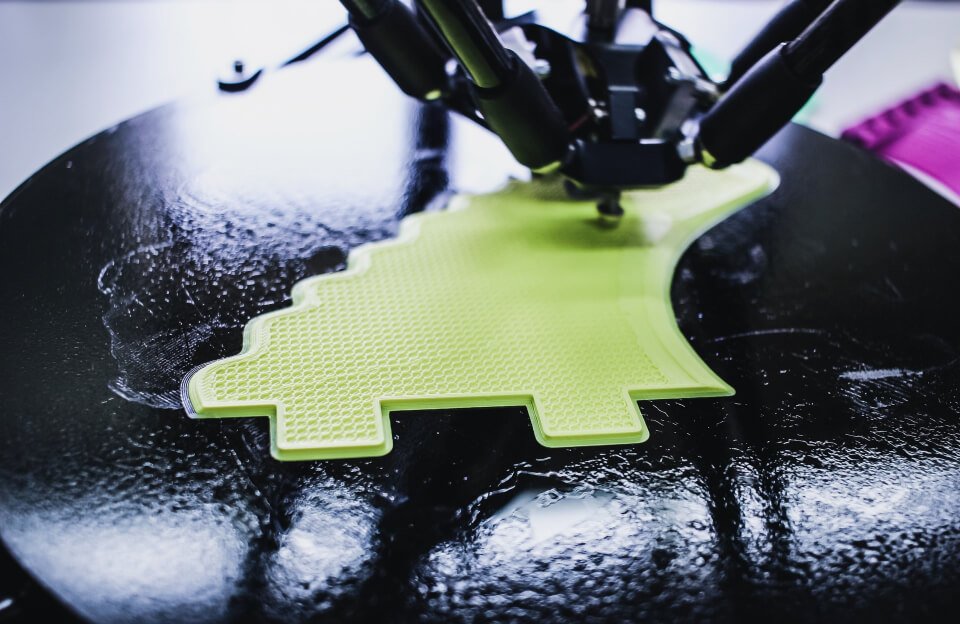
The Rise of 3D Printing Technology
The advent of 3D printing technology marks a significant milestone in the evolution of manufacturing processes. Initially developed in the 1980s with the introduction of stereolithography, 3D printing has witnessed substantial progress over the decades, evolving into a versatile and widely utilized method across various sectors. Today, it encompasses a range of techniques, including fused deposition modeling (FDM), selective laser sintering (SLS), and stereolithography (SLA), each offering unique advantages for different applications.
The materials used in 3D printing have also diversified. Early printers primarily utilized plastics, but advancements have enabled the use of metals, ceramics, and even bio-materials, expanding the scope of potential applications. This versatility has allowed industries such as aerospace, automotive, and healthcare to embrace 3D printing for rapid prototyping, custom part production, and even bioprinting of tissues and organs.
Accessibility is another crucial factor contributing to the rise of 3D printing. As the technology has matured, the costs associated with 3D printers have decreased significantly, making them attainable for consumers, small businesses, and educational institutions. With the proliferation of online platforms that offer 3D printing services and communities for sharing designs, individuals can now easily access a vast library of printable models.
Moreover, the impact of 3D printing technology extends beyond consumer use; it has revolutionized industries by optimizing supply chains, reducing waste, and enabling localized production. Innovations in design and production methodologies signify a paradigm shift in how products are conceived and manufactured. In essence, the evolution of 3D printing technology continues to reshape the future landscape of various industries, fostering creativity and enhancing efficiency.
How 3D Printing Can Revolutionize Everyday Repairs
3D printing technology has emerged as a transformative innovation, enabling individuals to repair or replace a myriad of items in their households, including fragile glassware. The ability to create functional objects from digital designs represents a significant shift in how we approach product consumption and waste. As this technology becomes more accessible, the potential for 3D printing to simplify everyday repairs and improve sustainability becomes increasingly evident.
One of the most compelling applications of 3D printing is the ability to replicate broken items. For instance, consumers can create their own replacement parts for items previously deemed irreparable. There are numerous successful examples of 3D-printed products ranging from household tools to decorative glass substitutes. These items can often be customized to match specific dimensions and aesthetic preferences, offering a tailored solution that traditional manufacturing methods often cannot provide.
Moreover, the growth of various online platforms has made it simpler for consumers to access a vast repository of existing designs. Many websites offer downloadable templates that allow users to print high-quality, durable products at home. This accessibility encourages creativity and innovation, empowering individuals to design their own objects as well. By using computer-aided design (CAD) software, users can develop unique templates fit for their needs. As a result, the practice of downloading and sharing these designs fosters a collaborative community focused on improvement and sustainability.
In terms of environmental impact, the shift toward 3D printing can significantly reduce waste generated by discarding broken items. By choosing to repair rather than replace, consumers contribute to a circular economy, where the lifecycle of products is extended, and material consumption is minimized. The integration of 3D printing into everyday repairs redefines our relationship with consumer products, encouraging a more sustainable and resource-conscious approach to maintaining our homes.
The Future of Customization and Personalization in Consumer Products
The advent of 3D printing technology is poised to significantly transform consumer products, particularly in the realm of customization and personalization. As this innovative manufacturing process continues to develop, it opens up a multitude of possibilities for consumers to design and create personalized versions of everyday items, including glassware. This shift towards individual production empowers consumers to tailor products to their specific preferences, from shape and size to color and texture.
One of the most promising aspects of 3D printing is its ability to facilitate on-demand production. Consumers can create items that not only meet their functional needs but also reflect their unique style and personality. This democratization of design encourages creativity and invites users to engage with their products in ways that were not previously possible. For instance, imagine designing a wine glass that fits perfectly in one’s hand or a decorative piece that complements personal aesthetics—3D printing could make such tailored solutions achievable.
However, this transition towards individualized consumer production does not come without its challenges. The industry must navigate various hurdles, including material limitations, printing precision, and consumer education. Additionally, as more consumers begin to embrace 3D printing, businesses will need to adapt their models to cater to this demand for customization. This could lead to significant shifts in manufacturing practices, supply chains, and distribution methods, requiring companies to rethink their operational strategies.
Despite these challenges, the potential benefits of personalized products are substantial. Enhanced customer satisfaction, reduced waste through on-demand production, and the ability to respond quickly to consumer demands are just a few advantages that could reshape the market landscape. As the future unfolds, it will be exciting to see how 3D printing continues to evolve and influence the way we think about consumer goods, paving the way for a more personalized and customized shopping experience.
Challenges and Considerations for 3D Printing Glass Items
The potential for 3D printing glass items is tantalizing, but several technical and practical challenges hinder its widespread adoption. One of the primary issues is the current state of technology. While there have been significant advancements in the realm of additive manufacturing, 3D printing glass remains a relatively nascent field. Traditional methods of glass production are well-established and can produce items with superior clarity and strength, presenting a high bar for any new 3D printing techniques that aim to compete.
Material limitations are also a significant factor. The primary materials available for 3D printing glass are often not equivalent in quality to those used in conventional glassmaking. Current 3D printing techniques often rely on glass powders or special filaments that may not yield the same transparency or thermal properties as solid glass. Consequently, the end products can lack the desired aesthetic properties, which are often crucial for both functional and artistic glass items.
Cost considerations play a vital role, as the equipment and materials required for 3D printing glass are typically more expensive than those used for traditional printing processes. Consumers may find the price point prohibitive, especially when conventional options are both efficient and cost-effective. Alongside cost, safety is an essential aspect of 3D printing glass. Operating machinery at high temperatures poses significant risks, and without proper safety measures, accidents can occur, impacting operator safety and limiting the scalability of such operations.
Looking to the future, ongoing research may address these obstacles. Emerging technologies, such as advanced laser systems and enhanced material science innovations, are poised to improve the quality and safety of 3D-printed glass items. As these technological advancements develop, they may open up new opportunities for producing unique glass products, making 3D printing a viable alternative to traditional methods in industries ranging from art to manufacturing.